
Session 10: Digital Perception and Artificial Intelligence for Power and Energy Systems
👤 Session Chair and Speakers
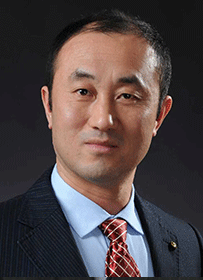
Prof. Dongsheng Yang is Vice Dean of the School of Information Science and Engineering, Northeastern University, China. He is a Chang Jiang Scholar appointed by the Ministry of Education, a recipient of the Special Government Allowance of the State Council, an IET Fellow, and an IEEE Senior Member. He was also selected for the New Century Excellent Talents Support Program of the Ministry of Education. His research focuses on state perception and representation modeling of complex industrial systems, source-grid-load coordinated optimization and control, fault recovery, and safe operation. He has led a number of major research projects, including key programs of the National Natural Science Foundation of China and tasks under the National Key R&D Program of China. He has published over 90 SCI-indexed papers in optimization-based cooperative control, fault recovery, and safe operation, and has filed more than 260 national invention patents. He has received one Second Prize of the State Science and Technology Progress Award and five first prizes at provincial or ministerial level. He currently serves as Associate Editor of IEEE Transactions on Cybernetics, IEEE Transactions on Neural Networks and Learning Systems, Electronics Letters, and other journals.

Prof. Mingyu Yan is a Professor and Doctoral Supervisor at the School of Electrical and Electronic Engineering, Huazhong University of Science and Technology, and a recipient of a national young talent program. He received his bachelor's, master's, and PhD degrees from Zhejiang University, Huazhong University of Science and Technology, and Illinois Institute of Technology, respectively. He was advised by Prof. Mohammad Shahidehpour, a member of the US National Academy of Engineering and an IEEE Life Fellow, and later worked as a Research Associate at Imperial College London. His research focuses on power-electronics-dominated power systems, power system operation and planning, microgrids, electric vehicles, and multi-energy systems. He has led five national-level projects, published over 60 papers, served as an editor for journals including Applied Energy, received the Outstanding Young Talent Award in Electric Power Science and Technology, and was listed among the World's Top 2% Scientists.
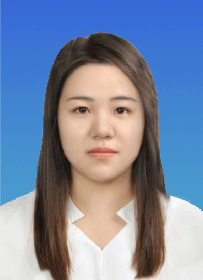
Dr. Yunhe Sun is an Associate Professor at the School of Computer Science, Shenyang Aerospace University. She concurrently serves as a member of the Technical Committee on Parallel Control and Management of the Chinese Association of Automation (CAA), and a Director of the IEEE PES Transformer Technical Committee (China). She has presided over more than ten research projects, including the National Natural Science Foundation of China, the Liaoning Provincial Natural Science Foundation, and projects funded by the Department of Education of Liaoning Province. She has published over 30 papers in international conference proceedings and academic journals as the first or corresponding author. She has received the First Prize of Science and Technology Progress Award from the China Instrument and Control Society, the First Prize of ICT China 2024, the Gold Award of the China International Invention and Innovation Exhibition, the Outstanding Scientific and Technological Achievement Award of the 2024 China International Big Data Expo, and the Third National Prize in the “Xinlü Cup” Innovation Competition for Empowering Carbon Peaking and Carbon Neutrality in the Information and Communication Industry. She has served as the Publication Chair for several international conferences, including ICN 2024, NGDN 2024 and 2025, and ISPA 2025.

Huanying Han is a lecturer and master's supervisor of the Zhan Tianyou College (CRRC College), Dalian Jiaotong University, China. She has been dedicated to teaching and research in the field of industrial equipment fault diagnosis for a long time. She has published 5 SCI/EI-indexed papers as the first author or corresponding author. She has also led a project funded by the Liaoning Provincial Natural Science Foundation. She has won the second prize of Liaoning Province's Graduate Teaching Achievement Award. She serves as a reviewer for several domestic and international academic journals. She is a member of the Parallel Control and Management Special Committee of the Chinese Association of Automation. In 2025, she was selected as a young talent under the "Innovation and Development Program for Dalian City".
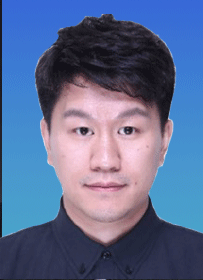
Zhou Bowen is an Associate Professor and Doctoral Supervisor at the School of Information Science and Engineering, Northeastern University, and also serves as the Deputy Dean of the School of Future Technologies. He is a Senior Member of IEEE and a Chartered Engineer (CEng). He holds editorial board positions for journals such as Energy Exploration & Exploitation and Sustainability, and is a member of the Expert Committee of the China Energy Society, as well as a council member of the IEEE Power & Energy Society (PES) Technical Committee in China. His research and teaching activities primarily focus on power system operation and control, electric vehicle-grid integration, virtual energy storage and demand response, and intelligent control of industrial loads. In recent years, he has led 21 research projects and published 74 SCI-indexed papers. He has obtained 45 authorized national invention patents, 1 European patent, and 7 software copyrights. Additionally, he has participated in the formulation of 5 national, industrial, and group standards, and has authored 3 academic books. His awards include 4 first-class and 3 second-class provincial/ministerial-level Scientific and Technological Progress Awards (one of the second-class awards was led by him), 1 China Outstanding Patent Award, 3 gold medals at international invention exhibitions, and 3 teaching achievement awards.
📋 Session Abstract
With the rapid advancement of energy transition and the development of new-type power systems, modern power and energy systems are facing increasing challenges caused by the high penetration of renewable energy, the widespread participation of distributed resources, the deep coupling of multiple energy carriers, growing demand-side flexibility, increasing operational uncertainty, and the rapid expansion of heterogeneous data. Digitalization technologies and artificial intelligence are providing new technical approaches for perception, modeling, forecasting, control, optimization, and secure operation of energy systems, accelerating the evolution from experience-driven operation toward data-driven, model-based, and intelligent decision-making. Meanwhile, emerging technologies such as digital twins, edge computing, quantum computing, and digital humans are creating new opportunities for complex optimization, human-machine collaborative dispatching, intelligent operation and maintenance, and interactive decision support in future energy systems.
This session focuses on "Digitalization and Artificial Intelligence Applications" and aims to bring together researchers, engineers, system operators, and industry practitioners from power systems, energy systems, artificial intelligence, automation, information and communication technologies, and related interdisciplinary fields. It will provide a forum for discussing digitalization technologies and their applications in energy systems, as well as AI-enabled theories, methods, tools, and engineering practices for smart power and energy systems.
Topics of interest include, but are not limited to, digital modeling and state perception of energy systems, power and energy big data analytics, AI-assisted load forecasting and renewable power forecasting, intelligent scheduling and operation optimization, source-grid-load-storage coordinated control, virtual power plants and flexible resource aggregation, equipment fault diagnosis and early warning, digital twins and simulation-based deduction, quantum computing applications in energy system optimization, digital humans for power customer service, operation and maintenance training, and dispatching assistance, edge computing, cloud-edge collaboration and multi-agent technologies, cyber-physical security and resilience, and intelligent decision-making and demonstration applications for new-type power systems.