
Session 11: Stability Assessment and Control of Modern Power Systems
👤 Session Chair(s) and Speakers
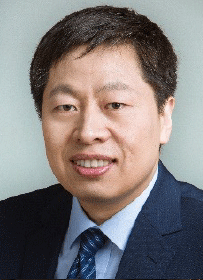
Zhang Hengxu is the professor at Shandong University and director of the National and Local Joint Engineering Laboratory for Electric Vehicle Grid Integration Technology. His main research directions include power system operation and control, covering frequency security and stability assessment and full-process refined frequency control; wideband synchronous measurement of electrical signals under strong noise and polymorphic components; deep perception and fault diagnosis for distribution networks; and the integration of large language models with traditional power system simulation. He proposed quantitative algorithms for frequency security and stability and refined control methods covering full-process constraints, developed the first wideband synchronous measurement prototype and a distribution network fault diagnosis system with internationally leading indicators (applied in national demonstration projects), and supervised the development of PowerManus software, which fuses large language models with power system simulation. He has led four national key projects, published over 120 SCI/EI papers, and holds more than 40 national invention patents (including one U.S. patent).
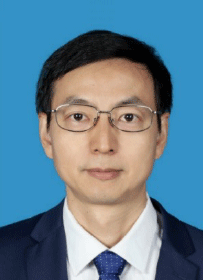
Li Wei,State Grid NARI Technology Co., Ltd.,Party Committee Secretary & Deputy General Manager with Power Grid Security and Stability Control Technology Branch, State Grid NARI Technology Co., Ltd. He leads technological innovation and corporate governance at NARI Group’s grid stability control division. He specializes in large-scale power grid security, pioneering breakthroughs in fault defense systems for critical grid infrastructure. His technical leadership has resolved core challenges in grid-wide stability mechanisms, enhancing resilience for ultra-high-voltage transmission networks across China. His honors include: National May 1st Labor Medal, State Grid Corporation Model Worker and State Grid May 4th Youth Medal.
📋 Session Abstract
The global energy transition, electrification of end-use sectors, and increasing penetration of renewable and power-electronic-based resources are fundamentally reshaping power system dynamics. Modern grids exhibit complex multi-scale, multi-physics, and stochastic behaviors that challenge conventional stability paradigms. This session provides a broad forum for advancing stability theories, assessment methodologies, and control strategies across the following key areas:
- (1) Stability of Renewable-Rich and Converter-Interfaced Systems. Including wideband oscillations, low-inertia frequency dynamics, transient overvoltage, weak-grid interactions, and Grid-Forming (GFM) / Grid-Following (GFL) control.
- (2) Stability in AC/DC Hybrid and Bulk Power Networks. Covering multi-infeed HVDC systems, flexible AC transmission, DC grid dynamics, and interaction between power electronics and conventional synchronous machines.
- (3) Data-Driven and AI-Enabled Stability Assessment. Real-time stability monitoring, early warning, risk identification, digital twin technologies, and physics-informed machine learning for situational awareness.
- (4) Coordinated Control of Distributed and Storage Resources. Virtual power plants, hybrid energy storage coordination, distributed energy resource (DER) aggregation, and multi-agent control for frequency/voltage support.
- (5) Resilience and Stability Under Extreme and Uncertain Conditions. Stability under extreme weather, cyber-physical contingencies, cascading failure analysis, and black-start/restoration strategies.
We invite contributions on analytical modeling, computational methods, real-time assessment tools, and innovative control designs that address stability challenges in any of the above domains. Studies that bridge theoretical advances with practical implementation, from component-level control to wide-area system operation, are particularly encouraged.