Session 4: Advanced Nuclear Energy and Intergrated Energy Technologies
👤 Session Chair(s) and Speakers
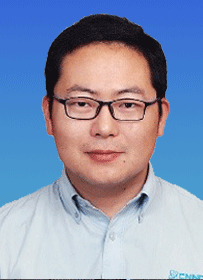
Zhai Changying, Senior Engineer, IEEE Senior Member, Secretary-General of the IEEE PES CSTC Nuclear Energy Subcommittee, Registered Expert of IEC SyC Smart Energy, Innovation and Entrepreneurship Mentor at North China Electric Power University, Senior Member of China Electrotechnical Society, Director of the Hybrid Simulation Laboratory for Nuclear Power Genration in New Power Systems in Fuqing NPP, and Youth Editorial Board Member of PCMP. His research focuses on nuclear power safety and multi-purpose utilization of nuclear energy, dedicated to the integrated innovation of nuclear energy and multi-energy complementarity, and promoting the development of new power systems. He edited 4 industry standards, and obtained 18 patents and software copyrights. He has been selected as a Fujian "Young Eagle Plan" Young Top Talent, a Fujian Provincial B-Class High-Level Talent, and awarded the Fujian Youth May Fourth Medal.
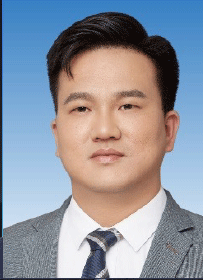
Xie Jun, Associate Professor, Doctoral Supervisor, Senior Member of IEEE, Senior Member of China Electrotechnical Society, Senior Member of Chinese Nuclear Society. He has presided over numerous national-level scientific and technological projects, including projects of the National Key R&D Program of China and programs supported by the National Natural Science Foundation of China. He received the Second Prize of Hebei Provincial Technical Invention Award, the Third Prize of Hebei Provincial Science and Technology Progress Award, and the Gold Medal at the Geneva International Exhibition of Inventions. He has published more than 50 SCI papers as the first author or corresponding author, holds 9 authorized invention patents, and has published 3 academic monographs.
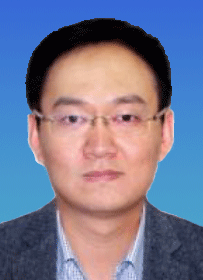
Cai Deyu, Associate Professor, IEEE Member, and IET Chartered Engineer, serving as Deputy Director of the Relay Protection Research Institute at the School of Electrical Engineering, Shandong University. Prior to joining Shandong University in March 2019, worked at SPIC Shanghai Electric Power Co., Ltd. from September 2012, specializing in international energy corporate M&A and energy project development. He joined Shandong University in 2019, and his current research focuses on new energy grid integration and smart grid technologies, covering AP1000 nuclear turbine sub-synchronous oscillation risk assessment, small modular reactor (SMR) applications, wide-band oscillation monitoring and analysis for high-renewable power grids, grid-forming inverter coordinated control and protection, wind turbine drive train safety evaluation, new energy application in oil and chemical industries, large power grid modeling, and multi-system co-simulations.
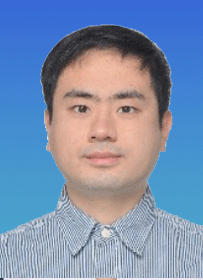
Dr. Zhang Huang is an Associate Professor at the Institute of Nuclear and New Energy Technology (INET), Tsinghua University. His research focuses on: 1) key technologies for nuclear hydrogen production; and 2) advanced thermal-hydraulic measurement techniques, with applications in high-temperature gas-cooled reactor (HTGR) hydrogen production, comprehensive utilization of the Linglong One (ACP100) small modular reactor, and steam generator development for the Guohe One (CAP1400) reactor. He has published over 50 peer-reviewed SCI papers. He has led or co-led multiple research projects, including National Key R&D Program of China, National Natural Science Foundation of China (NSFC), and Beijing Natural Science Foundation. He is the Principal Design Lead for a major national science and technology infrastructure project, serves as the Chinese representative for Nuclear Heat Non-Electric Applications (NECA) under the Generation IV International Forum (GIF), and is a Council Member of the Chinese Society of Particuology. He has been honored as an Elite Talent by the China National Nuclear Corporation (CNNC), with his project rated "Excellent" upon completion, and was also recognized as an Outstanding Doctoral Graduate of Tsinghua University.
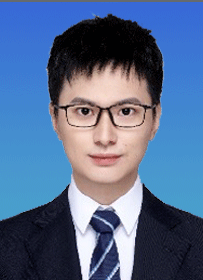
Yujian Ye is a National High-Level Young Talent and recipient of the New Era Youth Pioneer Award. He is a Youth Chair Professor and doctoral supervisor at the School of Electrical Engineering, Southeast University; a Huawei Zijin Young Scholar; a jointly appointed professor at Shenzhen Hetao College (National Academy of AI); and an Honorary Lecturer at Imperial College London. He also serves as Chair of the IEEE Systems, Man, and Cybernetics Society Nanjing Chapter. His research focuses on the interdisciplinary field of AI4Energy, particularly trustworthy scientific intelligence for the operational analysis and decision-making of complex integrated energy systems. Over the past five years, he has led nine national and provincial research projects, including projects funded by the National Natural Science Foundation of China and the National Key R&D Program of China, and undertaken more than ten industry-commissioned R&D projects from leading organizations and enterprises such as State Grid, China Southern Power Grid, Huawei, and Tencent. He has received several honors, including the China Electric Power Outstanding Young Talent Award, Wu Wenjun AI Outstanding Young Scholar Award, Huawei Spark Award, and IEEE PES China Outstanding Young Engineer Award.
📋 Session Abstract
Driven by the dual imperatives of carbon neutrality and energy security, the energy system is accelerating its transformation. New energy installed capacity continues to climb, and nuclear energy is experiencing a renaissance as a clean baseload source. Multi-energy coupling and advanced energy storage have become strategic pivots for building the new-type energy system. The world is placing higher demands on next-generation photovoltaics, deep-offshore wind power, and advanced nuclear energy, while long-duration energy storage, electrochemical storage safety, and the planning and operation of multi-energy flow coupling still face severe challenges. This Track focuses on full-chain innovations in new energy, energy storage, advanced nuclear energy, and multi-energy coupling, with key coverage including: perovskite/tandem photovoltaics, floating wind power, and enhanced geothermal systems; advanced pressurized water reactors, small modular reactors (SMRs), Generation IV reactors, nuclear heating, and hydrogen production with comprehensive utilization; solid-state/flow batteries, advanced compressed air energy storage, and gravity energy storage; inertia support, stability control, and coordinated peak shaving in power systems with high shares of renewables and nuclear; electricity-heat-hydrogen-gas multi-energy coupling and source-grid-load-storage integration; V2G and hydrogen-electricity coupling; as well as cross-cutting areas such as electricity markets and virtual power plants. We sincerely invite submissions from experts and scholars worldwide to jointly promote theoretical breakthroughs and industrial synergy.