Session 1: Novel Solar Cell Technologies
👤 Session Chair(s) and Speakers

Peng Cui
North China Electric Power University
Peng Cui is an Associate Professor at the School of New Energy, North China Electric Power University. He has been selected for the Young Elite Scientists Sponsorship Program by the China Association for Science and Technology and the Beijing Nova Program, and currently serves as Deputy Secretary of the Youth League Committee of the university. His research focuses on emerging photovoltaic technologies. In recent years, he has led projects supported by the National Natural Science Foundation of China and the Beijing Natural Science Foundation Key Program, and has participated as a key member in more than ten major research projects, including NSFC key projects and National Key R&D Program projects. He has published first-author papers in internationally renowned journals such as Nature Energy and Joule, with more than 60 SCI-indexed papers in total, including 6 ESI Highly Cited Papers. He has received the Second Prize of the Natural Science Award from the Ministry of Education, the IEEE PES Outstanding Young Professionals Award, and the Beijing First Set of High-end New Energy Equipment Award. He also serves as a member of the Youth Committee of the Chinese Renewable Energy Society and a Youth Editorial Board Member of SCIENCE CHINA Materials.
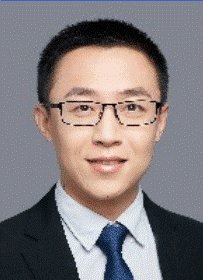
Jiang Yan
Beijing Intelligent Technology University
Yan Jiang is a Professor at Beijing Intelligent Technology University (BITU) and a recipient of the National Elite Youth Talent Program. His research focuses on the development of next-generation low-cost, high-performance thin-film solar cells, with a particular commitment to understanding the optical and electrical losses, degradation mechanisms, and commercialization challenges of perovskite-based solar cells. To date, he has published over 90 papers in internationally renowned journals in the fields of materials and energy, including Nat. Energy (4), Nat. Commun (2), Joule (2), J. Am. Chem. Soc. (2), Angew. Chem. Int. Ed., and Energy Environ. Sci. (4). Among these publications, 8 have been recognized as ESI Highly Cited Papers (top 1%) and 1 as an ESI Hot Paper (top 0.1%), accumulating over 8,000 citations. His research achievements have been featured and highlighted by prominent academic and technology media outlets, such as Nature Energy, Science Daily, Scienmag, Nanowerk, and phys.org. Additionally, he has filed 6 Chinese patents.
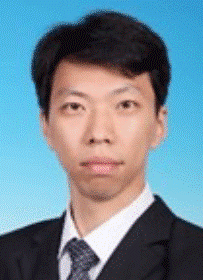
Zhang Xin
University of Chinese Academy of Sciences
Xin Zhang is a Professor and doctoral supervisor at the University of Chinese Academy of Sciences. His recent research focuses on the design and synthesis of key materials for organic solar cells and device processing. He has published more than 50 SCI papers as first author or corresponding author in journals such as Acc. Chem. Res., J. Am. Chem. Soc., Angew. Chem. Int. Ed., Adv. Mater., and Energy Environ. Sci. He has led multiple research projects, including a project under the National Key Research and Development Program of China and a General Program of the National Natural Science Foundation of China. He received the Thieme Chemistry Journals Award (2025) and was selected as a member of the Youth Innovation Promotion Association of the Chinese Academy of Sciences (2022). He was also recognized as a Journal of Materials Chemistry A Emerging Investigator in materials chemistry by the Royal Society of Chemistry (2024) and a ChemComm Emerging Investigator (2025). He has been invited to serve as a Guest Editor of Macromolecular Rapid Communications and as a Youth Editorial Board Member of journals such as SusMat, SmartMat, and The Innovation Materials.

Yuyi Feng
North China Electric Power University
Yuyi Feng received her doctoral degree from the University of Konstanz in Germany. She then worked as a postdoctoral researcher at the University of Konstanz and the Beijing Institute of Technology. She is currently an associate professor at North China Electric Power University. She also serves as the director of the teaching and research section. She has published over 20 papers in prestigious journals, including Matter, Nature Communications, and Optics Express. She has established strong collaborative relationships with research institutions in Germany, the United Kingdom, and the United States. She is the principal investigator of six research grants, including projects supported by the National Natural Science Foundation of China (NSFC). She has also served as a core member of five key initiatives, such as the NSFC International Cooperation Project. She received the Session Organization Award at the PIERS conference in 2022 and was honored with the Outstanding Talent Program of the Kunlun Talent Scheme in Qinghai Province.

Hao Huang
North China Electric Power University
Hao Huang is a Master’s Supervisor at the School of New Energy, North China Electric Power University. He received his Doctoral degree at June 2023. His teaching and research focus on solar cell materials and devices, with particular emphasis on fundamental mechanism interpretation and technological innovation of perovskite solar cells. Up to now, he has published 26 papers as the first or corresponding author (including co-authors) in internationally renowned journals such as Nature Energy, Joule (3), Nature Communications (2), Energy & Environmental Science and Advanced Materials (3 papers), including 6 Highly Cited Papers and 2 Hot Papers, with an H-index of 23. He presides over the Youth Program of the National Natural Science Foundation of China (NSFC) and has participated in more than 10 research projects including key NSFC projects as a core researcher, and holds 2 authorized patents. He was awarded the Excellent Doctoral Dissertation of Beijing Municipality in 2024 and the IEEE PES Best Publication Award in the same year.
📋 Session Abstract
Against the backdrop of rapid global renewable energy scale-up, advanced solar cells have become a key technological breakthrough direction. They serve diverse applications—including centralized power plant upgrades, special and mobile power supply, BIPV, flexible wearable devices, and aerospace—offering large efficiency margins, low-temperature processability, flexibility, and semi-transparency. This session focuses on innovations in perovskite and other novel solar cells. Its scope covers multiple technical systems (perovskite, organic, and tandem solar cells), mass-production processes (ambient-air fabrication, large-area coating-printing, module encapsulation), and the development of flexible, lightweight, and semi-transparent photovoltaic devices. It also addresses cell degradation mechanisms under coupled light-thermal-mechanical fields, long-term stability evaluation systems, and interdisciplinary research on on-site demonstration of perovskite power stations and integrated PV-energy storage systems. We sincerely invite global experts and scholars to submit manuscripts, jointly advancing fundamental theoretical progress, key technology iteration, and coordinated industrial implementation across the entire perovskite photovoltaic supply chain.