
Session 14: Computing-Electricity Synergy Technology under the Energy Internet Context
👤 Session Chair(s) and Speakers
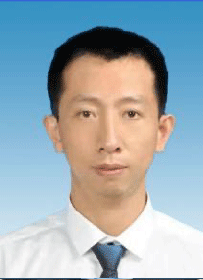
Qiuye Sun is a professor at Shenyang University of Technology. He is a national leading talent, an expert enjoying the State Council's Special Allowance, a teaching expert in curriculum-based ideological and political education of the Ministry of Education, a top-notch talent of the Ministry of Education, a fellow of IET. He serves as the chair of the IEEE PES Energy Internet Technology Committee (China), the chair of the Liaoning Electrical Engineering Association, and the secretary-general of the Energy Internet Special Committee of the China Automation Society. His main research fields include optimization control of energy internet, coordinated optimization and control of power and computing, etc. As a co-author of the top three, he received the National Natural Science Award and the National Science and Technology Progress Award. As the first author, he won the Excellent Award of the China Patent Award, the First Prize of the Technology Invention of Liaoning Province, the First Prize of the Progress of Automation Society, the First Prize of the Natural Science of Automation Society, the Second Prize of the Technical Invention of the Artificial Intelligence Society, the Best Innovation Achievement Award of the China Electrical Engineering Society, and the Leading Technology in the Manufacturing Equipment Field of "Ke Xue Zhong Yuan" of the China Association for Science and Technology, among others. He has received more than 30 important awards.

Yujia Huang is a Master's Supervisor at Shenyang University of Technology. She was selected for the "First Liaoning Provincial Youth Science and Technology Talent Support Project" and serves as the Secretary of the IEEE PES Energy Internet Technical Committee (China). She has presided over 10 horizontal and vertical projects including the Youth Fund of NSFC and the Science and Technology Project of the Headquarters of State Grid Corporation of China. She has published more than 20 papers in well-known domestic and international journals such as IEEE Transactions and Proceedings of the Chinese Society for Electrical Engineering. Many of her papers have been selected as ESI Global Top 1% Highly Cited Papers, High-Impact Papers/High-Download Papers of Proceedings of the Chinese Society for Electrical Engineering. She has won multiple awards including the Best Conference Paper Award at IEEE EI2 and IEEE ICEI, the 2025 IEEE Smart Grid Comm Outstanding Doctoral Dissertation Award, and the Outstanding Doctoral Dissertation Award of the Chinese Metallurgical Education Society.
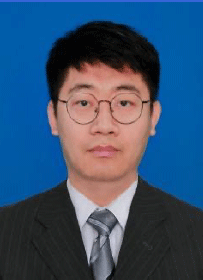
Rui Wang is a Professor at the College of Information Science and Engineering, Northeastern University. He is an IEEE Senior Member, Secretary-General of the Working Committee on New Energy Storage Technology and Integrated Energy Systems of the Chinese Association of Refrigeration, and a member of the Advisory and Decision-Making Expert Group on Energy Storage of the China Association for Science and Technology (CAST). He was selected for the "Young Talent Support Project" of CAST and awarded the "Elsevier RINENG Outstanding Young Scientist". He has published 19 full-length papers in IEEE Transactions as the first author, and presided over 16 horizontal and vertical projects including the Youth Fund of the National Natural Science Foundation of China (NSFC). As the second completer, he has won multiple honors including the First Prize of Natural Science of the Chinese Simulation Federation, the First Prize of Natural Science of the Chinese Association of Automation, and the Second-Class Achievement of the Teaching Achievement Incentive Program of the Chinese Association for Artificial Intelligence.
📋 Session Abstract
With the explosive growth of large-scale artificial intelligence models, data centers, as the core infrastructure supporting computing power services, have seen their scale continuously expand while the contradiction between energy consumption and energy demand has become a major challenge for global sustainable development. In the context of the energy internet, the collaborative technology of computing and electricity focuses on the deep coupling and optimization regulation between computing resources and the power system. Currently, as the main entity of high energy-consuming loads, data centers face an increasingly prominent contradiction between their electricity demand and the carrying capacity of the power system, as well as the capacity for absorbing renewable energy. It is urgent to seek systematic solutions from the theoretical and technical perspectives. Therefore, this special topic focuses on "Key Technologies of Computing and Electricity Collaboration in the Energy Internet Background", bringing together forces from multiple disciplines such as power systems, computer science, and control engineering, to systematically explore the basic theoretical framework, resource scheduling mechanism, and engineering implementation path of computing and electricity collaboration. The aim is to provide theoretical support and engineering references for the green and low-carbon transformation of the computing power industry and the safe and stable operation of the new power system.