Session 15: Coordinated Electricity-Carbon Optimization and Low-Carbon Dispatch
👤 Session Chair(s) and Speakers
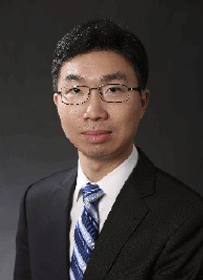
Haiwang Zhong is a tenured Associate Professor at the Department of Electrical Engineering, Tsinghua University, and an IEEE Senior Member. He serves as Director of the Center for Energy Strategy and Operations Research (EIII) and the Institute of Trading and Operations Research (Sichuan Energy Internet Research Institute). Supported by the NSFC Excellent Young Scientists Fund, his research focuses on power system optimal operation and electricity markets. His work in smart grid dispatch and renewable energy integration has been widely implemented in practical engineering. His professional leadership includes serving as Convenor of CIGRE C1.54, Secretary of CIGRE D2.53, Vice Chair of CIGRE NGN China, Deputy Secretary-General of IEEE PCCC, and a member of the IEEE PES Long-Range Planning Committee. He was awarded the ProSPER.Net Young Scientist Award, three Gold Medals at the Geneva Inventions Exhibition, and five provincial Science & Technology Awards.

Dr. Tong Cheng received the B.S. and Ph.D. degree in electrical engineering from Tsinghua University, Beijing, China, in 2020 and 2025. He is currently working as a Postdoc in the department of electrical engineering in Tsinghua University. His research interests include power system operations, coordinated optimal dispatch and electricity markets.
📋 Session Abstract
With the advancement of carbon neutrality goals and the rapid integration of renewable energy, new power systems are moving toward coordinated operation that balances security, economy, flexibility, and low-carbon performance. Coordinated electricity-carbon optimization integrates carbon emission constraints, carbon costs, carbon responsibility allocation, and carbon market signals into power system dispatch and operational decision-making. It emphasizes the coupling of power flows, carbon flows, information flows to support low-carbon coordination among generation, grid, load, and storage resources.
This special session focuses on theories, models, and methods for coordinated electricity-carbon optimization and low-carbon dispatch in new power systems. It aims to explore advanced optimization methods, market mechanisms, and approaches for carbon-aware operation, renewable energy integration, and green energy transition.
The topics of interest include, but are not limited to:
- Electricity-carbon coupling modeling and coordinated optimization
- Carbon emission flow tracing, allocation, and accounting
- Low-carbon economic dispatch with carbon constraints and costs
- Coordination of electricity markets and carbon markets
- Low-carbon optimization of generation-grid-load-storage resources
- Electricity-computing coordination involving data centers and flexible computing loads
- Electricity-carbon dispatch in integrated energy and multi-energy systems