
Session 6: Advanced Battery Technologies and Energy Storage Materials (Energy Storage Session 1)
👤 Session Chair(s) and Speakers
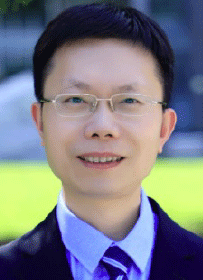
Chuan Wu is a professor at Beijing Institute of Technology, where his research interests are new energy materials and secondary batteries. He was selected as National High-Level Talent, and Fellow of the Royal Society of Chemistry; awarded New Century Excellent Talents in the University, Beijing Nova Program Award, and Beijing Outstanding Talents Cultivation Project. He was selected into Clarivate Highly Cited Researchers, and Elsevier Highly Cited Chinese Researchers. Prof. Wu is an Excecutive Editor-in-Chief of Energy Material Advances, a Science Paterner Journal.

Dr. Yanhong Wang is an Associate Professor at the School of New Energy, North China Electric Power University. His research focuses on fundamental studies and applied development of energy storage materials, with primary interests in the lithium storage behavior and application of silicon-based anodes for lithium-ion batteries, as well as the construction of solid-state battery electrolytes and their ion transport mechanisms. He has served as Principal Investigator for multiple projects funded by the National Natural Science Foundation of China (NSFC) and has led several industry-commissioned development projects. He has also participated in multiple National Key Research and Development Programs and other national-level projects. He has published over 40 papers, including 25 in TOP journals and 2 ESI highly cited papers. His work has received a total of over 3,000 citations, with an h-index of 21. He has filed 17 Chinese invention patents, 9 of which have been granted. He is a recipient of the Second Prize of Natural Science Award of the Chinese Society of Particuology.
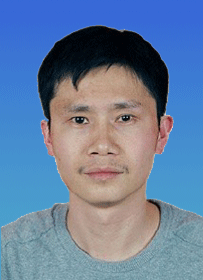
Lehao Liu,Associate Professor and Doctoral Supervisor, core member of an outstanding education team at Beijing's universities. Young Editorial Board Member for journals such as Journal of Materials Engineering, and serves as Deputy Secretary-General of the IEEE PES Technical Committee on Energy Storage Materials and Devices. Mainly engaged in research on lithium/sodium-ion batteries and large-scale energy storage technologies, and co-developed an oxide solid electrolyte that achieved the first pilot-scale production in China. Published over 60 papers in journals such as Progress in Materials Science and Advanced Materials, and filed more than 10 invention patents. Actively involved as a key contributor in teaching projects including New Engineering Research and Practice Programs and the Ministry of Education's Textbook System for Strategic Emerging Fields. Led or participated in scientific research projects funded by the National Natural Science Foundation of China, provincial and ministerial-level science and technology programs, and Samsung GRO. Awarded the Second Prize of National Teaching Achievement and the Second Prize of Provincial Science and Technology.

Dr. Xuelong Wang is an Associate Professor and Ph.D. Advisor at the Beijing Frontier Research Center for Clean Energy, Institute of Physics, Chinese Academy of Sciences. Since 2023, he has been supported by the National Youth Talent Program (Overseas) and is engaged in research on solid-state secondary batteries. His research focuses on investigating the physical-chemical processes and underlying principles of battery materials and devices, by integrating multiscale simulation methods with advanced characterization techniques and data-based approaches. In recent years, he has published nearly 60 academic papers in top-tier journals such as Nature Materials, Physical Review Letters, and Journal of the American Chemical Society. Among them, he was corresponding/first author for over 30 papers with a total of over 5,000 citations.

Dr. Yu Li is a Associate Professor and Ph.D. supervisor at the School of Materials Science and Engineering, Beijing Institute of Technology. Her research focuses on key materials for emerging energy-storage batteries. She has been selected for the Beijing Nova Program, and the National Postdoctoral Program for Innovative Talents. She serves as a Young Editorial Board Member for journals including Energy Material Advances and Carbon Neutralization. She has received the First Prize of the Science and Technology Award of the China General Chamber of Commerce and the Second Prize of the Invention and Innovation Award of the China Association of Inventions. She has served as principal investigator of several research projects, including General Program and Young Scientists Fund projects of the National Natural Science Foundation of China. In recent years, she has published more than 90 peer-reviewed papers in journals including Advanced Materials, Angewandte Chemie International Edition, and Journal of the American Chemical Society, with 12 papers recognized as ESI Highly Cited Papers. Her publications have received more than 10,600 citations, with an H-index of 53.
📋 Session Abstract
Driven by the global energy transition and the goal of carbon neutrality, next-generation energy storage technologies, represented by lithium-ion batteries and sodium-ion batteries, have become the cornerstone for strategic emerging industries such as electric vehicles, large-scale energy storage, low-altitude economy, and AI computing power. However, with the increasing demands for extreme application scenarios (ultra-high energy density, ultra-fast charging, wide temperature range, intrinsic safety) and resource sustainability, current battery systems still face significant challenges in materials innovation, manufacturing processes, system integration, and life-cycle management.
This session aims to build a comprehensive, cutting-edge, and interdisciplinary academic exchange platform. It will deeply explore key topics including the ultimate breakthroughs in lithium batteries, the industrialization sprint of sodium batteries, the safety paradigm of solid-state batteries, innovative explorations of next-generation systems (e.g., lithium-sulfur and lithium-air), AI-driven smart battery technologies, as well as battery recycling and in-situ characterization techniques. We cordially invite experts from academia and industry to jointly chart the technology roadmap and accelerate the innovation and application of advanced battery technologies.
- (1) Solid-State Batteries and High-Safety Battery Systems
- (2) Key Materials and Industrialization of Sodium-Ion Batteries
- (3) High-Energy-Density Anode and Cathode Materials for Next-Generation Lithium Battery Systems
- (4) Emerging Energy Storage Chemistries (Potassium, Zinc, Magnesium, Aluminum, etc.)
- (5) AI and Data-Driven Battery Intelligence Technologies
- (6) Battery System Integration, Thermal Management, and Fault Diagnosis
- (7) Failure Analysis, Recycling & Regeneration, and Characterization Techniques