Call for Tracks
Call for Tracks
The conference invites technical committees, research teams, and experts to submit proposals for Technical Tracks. The tracks should focus on cutting-edge technologies, innovative methods, and engineering applications in renewable energy and carbon neutrality, addressing key issues in power and energy systems with clear academic value, engineering significance, and industry impact. Technical tracks should align with current research hotspots and industry development needs, promoting academic exchange, technological innovation, and industry-academia-research cooperation. Accepted papers will be published in IEEE Xplore. For interested parties, please contact the conference secretariat at ieee_recnt@163.com.
Track 1: Digitalization and AI Applications
Track Chairs and Invited Speakers:
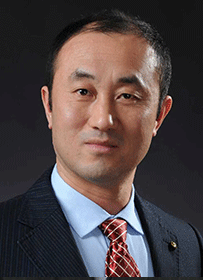
Dongsheng Yang
Northeastern University

Bowen Zhou
Northeastern University

Mingyu Yan
Huazhong University of Science and Technology
Track Introduction:
This track focuses on "Digitalization and AI Applications," gathering experts from power systems, energy systems, artificial intelligence, automatic control, information and communications, and related interdisciplinary fields. It aims to explore the application of digital technologies in energy systems and the key theories, methods, and engineering practices of AI in intelligent power and energy systems. Topics include but are not limited to: digital modeling and state perception of energy systems, big data analysis of power and energy, AI-assisted load forecasting and renewable energy power forecasting, intelligent scheduling and operation optimization, source-grid-load-storage coordination control, virtual power plants and flexible resource aggregation, equipment fault diagnosis and early warning, digital twin and simulation, quantum computing in energy system optimization, digital humans in power intelligent customer service, operation and maintenance training and dispatch assistance, edge computing, cloud-edge collaboration and multi-agent technology, power cyber-physical system security and resilience, and intelligent decision-making and application demonstrations for new power systems.
Track 2: Key Technologies for Computing-Power Coordination in Energy Internet
Track Chairs and Invited Speakers:
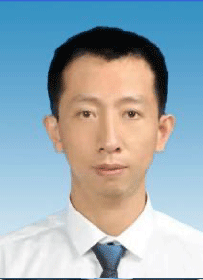
Qiuye Sun
Shenyang University of Technology

Yujia Huang
Shenyang University of Technology

Rui Wang
Northeastern University
Track Introduction:
With the explosive growth of AI large models, data centers, as the core infrastructure supporting computing services, have been expanding continuously, and the contradiction between their scale expansion and energy consumption has become a major challenge for global sustainable development. In the context of Energy Internet, computing-power coordination technology focuses on the deep coupling and optimal regulation between computing resources and power systems. Currently, data centers, as high energy-consuming loads, face increasingly prominent contradictions between their electricity demand and power system carrying capacity as well as renewable energy consumption capacity, urgently requiring systematic solutions from theoretical and technical perspectives. Therefore, this track focuses on "Key Technologies for Computing-Power Coordination in Energy Internet," gathering multidisciplinary forces from power systems, computer science, and control engineering to systematically explore the basic theoretical framework, resource scheduling mechanisms, and engineering implementation paths for computing-power coordination, aiming to provide theoretical support and engineering references for the green and low-carbon transformation of the computing industry and the safe and stable operation of new power systems.
Track 3: Flexible Transmission and Distribution Technology
Track Chairs and Invited Speakers:

Qiyu Chen
China Electric Power Research Institute Co., Ltd.

Zhengang Lu
China Electric Power Research Institute Co., Ltd.
Track Introduction:
Flexible transmission and distribution is the core supporting technology for new power system construction. Relying on advanced power electronics, intelligent control, and communication technologies, it can achieve precise dynamic regulation of grid voltage, power, and other parameters, with advantages of fast response, flexible operation, and strong controllability. It is a key technology system to solve industry challenges such as large-scale renewable energy grid integration, efficient power transmission, and flexible distribution network interconnection, widely used in scenarios such as wind and solar power consumption, long-distance transmission, island power supply, and intelligent distribution network upgrading. This sub-forum focuses on cutting-edge technologies and industrial applications in the global flexible transmission and distribution field, based on international energy transformation development trends, gathering experts and scholars from domestic and foreign universities, research institutes, and leading enterprises. The forum will conduct academic discussions and technical exchanges on core topics such as flexible AC/DC transmission, multi-terminal flexible grid architecture, new power equipment, renewable energy grid integration adaptation, and power grid security and stability control. It aims to share cutting-edge research achievements, explore technical bottlenecks and breakthrough directions, connect international innovation resources, promote the iterative upgrading and scaled engineering applications of flexible transmission and distribution technology, and build an efficient international exchange and cooperation platform for the high-quality construction of global new power systems.
Track 4: Electric-Carbon Collaborative Optimization and Low-Carbon Dispatch Methods for New Power Systems
Track Chairs and Invited Speakers:

Haiwang Zhong
Tsinghua University

Tong Cheng
Tsinghua University
Track Introduction:
With the advancement of the "dual carbon" goal and high-proportion renewable energy integration, the operation of new power systems is transitioning from traditional economic security dispatch to a collaborative optimization mode that considers safety, economy, flexibility, and low-carbon aspects. Electric-carbon collaborative optimization emphasizes the deep coupling of power flow, carbon flow, and information flow. By integrating carbon emission constraints, carbon costs, carbon responsibility allocation, and carbon market mechanisms into power system dispatch and operation decisions, it achieves low-carbon collaborative operation of multi-resources such as generation, grid, load, and storage. This track focuses on key theories, models, and methods for electric-carbon collaborative optimization and low-carbon dispatch in new power systems, exploring frontier issues such as carbon emission flow analysis, low-carbon economic dispatch, electric-carbon market coordination, and computing-power coordination, providing methodological support for improving renewable energy consumption capacity, reducing system carbon emissions, and promoting green and low-carbon transformation of power systems. Research topics of interest include but are not limited to:
- Electric-carbon coupling modeling and collaborative optimization theory for new power systems
- Carbon emission flow tracking, allocation, and accounting methods
- Low-carbon economic dispatch considering carbon constraints and carbon costs
- Collaborative operation mechanisms for electricity and carbon markets
- Low-carbon collaborative optimization of multi-resources from source, grid, load, and storage
- Computing-power collaborative optimization of computing loads, data centers, and power systems
- Electric-carbon collaborative dispatch in regional integrated energy systems and multi-energy complementary scenarios
Track 5: Energy Development and Renewable Energy and Energy Storage Technologies
Track Chairs and Invited Speakers:

Changying Zhai
CNNC Fuqing Nuclear

Jun Xie
North China Electric Power University
Deyu Cai
Shandong University

Huang Zhang
Tsinghua University

Yujian Ye
Southeast University
Track Introduction:
Driven by global carbon neutrality and energy security, the energy system is accelerating transformation. Renewable energy installed capacity continues to rise, nuclear energy as a clean baseload is experiencing a renaissance, and multi-energy coupling and advanced energy storage have become strategic pillars for building a new energy system. The world has higher requirements for next-generation photovoltaics, offshore wind power, and advanced nuclear energy, while long-duration energy storage, electrochemical energy storage safety, and multi-energy flow coupling planning and operation still face severe challenges. This track focuses on full-chain innovation in renewable energy, energy storage, advanced nuclear energy, and multi-energy coupling, covering: perovskite/ tandem photovoltaics, floating offshore wind power, enhanced geothermal; advanced pressurized water reactors, SMR, fourth-generation reactors, nuclear heating, hydrogen production and comprehensive utilization; solid-state/ flow batteries, advanced compressed air energy storage, gravity energy storage; inertia support, stability control, and coordinated peak shaving for high-proportion renewable energy and nuclear power systems; electricity-heat-hydrogen-gas multi-energy coupling and source-grid-load-storage integration; V2G and hydrogen-electricity coupling; and power markets and virtual power plants. We sincerely invite domestic and foreign experts and scholars to contribute, promoting theoretical breakthroughs and industrial cooperation.
Track 6: Synchronous Stability Assessment and Control
Track Chairs and Invited Speakers:

Hengxu Zhang
Shandong University
Track Introduction:
This track contains five technical reports, discussing key frontier issues in synchronous stability research. 1) Focus on the construction of a unified modeling framework, describing the synchronous stability characteristics of synchronous generators and power electronic converters under a unified mathematical structure to achieve comparative analysis and unified understanding of different instability mechanisms. 2) Focus on transient synchronous stability analysis methods, including extended equal area criteria for PLL-synchronized converters, energy function-based analysis methods, and phase plane analysis techniques. 3) Research on small-signal synchronous stability issues under weak grid conditions, focusing on analyzing the interaction mechanisms between PLL dynamic characteristics, current control loops, and network resonances. 4) Explore control strategies to enhance synchronous stability, including adaptive PLL design, grid-forming control technology with intrinsic synchronous torque characteristics, and coordinated protection and control schemes. 5) Research on real-time assessment and early warning technology for synchronous stability, using Wide Area Measurement Systems (WAMS) and local data-driven methods to achieve prediction and early warning of synchronous instability risks and loss-of-synchronization events. Each report will introduce specific research problems, analysis methods, and main research results.
Track 7: Smart Energy and Power Systems
Track Chairs and Invited Speakers:

Chong Wang
Hohai University

Lei Gan
Hohai University
Technical Scope:
Smart energy; New power system and smart grid architecture; Power system operation, planning, and economics; Power-electronized power systems; High-voltage AC/DC transmission and equipment......
Track 8: Intelligent Transportation and Transport Electrification
Track Chairs and Invited Speakers:

Quanqing Yu
Harbin University of Technology and Science

Aihua Tang
Chongqing University of Technology and Science
Technical Scope:
Facing the global carbon neutrality goal and increasingly severe urban traffic congestion, the transportation system is undergoing profound energy and operational mode transformation. This track focuses on the cutting-edge interdisciplinary field of "Intelligent Transportation and Transport Electrification," aiming to explore the deep integration path of electrified vehicles with next-generation information technologies such as intelligent connectivity, big data, and artificial intelligence, and promote the construction of an efficient, low-carbon, safe, and resilient future integrated transportation-energy system. The track will focus on the following key topics:
- (1) Cooperative optimal control of intelligent connected electric vehicles and traffic signal systems
- (2) High-power fast charging and vehicle-road energy interaction for transport electrification
- (3) Energy management and path optimization for electrified fleets under vehicle-road-cloud coordination
- (4) Resilience assessment of transportation electrification systems driven by renewable energy
- (5) Innovative applications of artificial intelligence in vehicle fault diagnosis, energy efficiency improvement, and predictive maintenance
- (6) New energy vehicles and green transportation
Track 9: Key Technologies for Reliability Improvement of AC/DC GIL Equipment
Track Chairs and Invited Speakers:

Chuanyang Li
Tsinghua University

Tiejun Ma
CNNC Fuqing Nuclear

Weiqi Qin
Tsinghua University

Chaoyang Kang
Tsinghua University

Chunxin Wang
North China Electric Power University

Jingbo Zhao
Tsinghua University

Chenxu Liu
Tsinghua University
Track Introduction:
The large-scale long-distance transmission of clean energy in western China is a core requirement for new power system construction. Represented by the downstream hydropower project on the Yarlung Zangbo River, its large-capacity transmission urgently requires a coordinated scheme of AC GIL inside the station and DC GIL outside the station. However, the extremely complex geographical environment and harsh operating conditions pose great challenges to the reliability of the above AC/DC GIL equipment.
This track focuses on "Key Technologies for Reliability Improvement of AC/DC GIL Equipment," aiming to explore the latest progress in basic theory, equipment development, and intelligent operation and maintenance, providing technical support for project implementation. Topics include but are not limited to:
- (1) AC/DC GIL insulation material performance control and formulation.
- (2) AC/DC GIL gas-solid insulation characteristics and failure mechanisms.
- (3) AC/DC GIL insulation structure design and optimization.
- (4) AC/DC GIL manufacturing process and testing technology.
- (5) AC/DC GIL monitoring and operation and maintenance technology.
- (6) Reliability improvement of AC/DC disconnectors, bushings and other key components.
- (7) Other related topics.
Track 10: Intelligent Wind Farm Technology: Unleashing the Full-Lifecycle Potential of Wind Power
Track Chairs and Invited Speakers:

Jie Yan
North China Electric Power University
Track Introduction:
Against the backdrop of accelerating global energy transformation, wind energy development is transitioning from the "scale expansion" stage to the "intelligent operation" stage. However, challenges such as wind resource uncertainty, complex terrain adaptability, high operation and maintenance costs, and electricity market fluctuations severely constrain the economy and reliability of wind power. This track focuses on how to use artificial intelligence, big data, digital twin and advanced control theory to open up the full-chain intelligent closed-loop of wind farms from "resource assessment-design-operation-maintenance-multi-energy coordination."
We particularly welcome submissions in the following cutting-edge directions (including but not limited to): high-resolution resource mapping based on multi-source remote sensing and machine learning; high-fidelity wind farm flow field calculation; intelligent micro-siting and collection system optimization for cost reduction and efficiency improvement; coordinated control strategies considering fatigue load and wake effect; ultra-short-term and short-term power prediction; intelligent bidding and risk hedging algorithms for electricity markets; early fault diagnosis and health state assessment based on wind turbine operation characteristic signals; coordinated optimal dispatch of wind-solar-storage-hydrogen multi-energy complementary systems.
We look forward to your innovative achievements to play a key role in building high-reliability and high-yield intelligent wind farms.
Track 11: Smart Operation and Maintenance of Photovoltaic Power Stations
Track Chairs and Invited Speakers:
Jifeng Song
Energy and Power Innovation Research Institute
Track Introduction:
Driven by the "dual carbon" strategy, the proportion of installed photovoltaic capacity is growing rapidly. Photovoltaic power stations have gradually transitioned from the "construction peak period" to the "operation and maintenance profit period," followed by a sharp increase in long-term operation and maintenance service demand. Using high-efficiency and low-cost smart operation and maintenance methods to diagnose faults, reduce electricity costs, and improve overall power station revenue is currently the hottest topic in this field. This forum focuses on but is not limited to the following directions:
- (1) Photovoltaic output prediction.
- (2) Fault diagnosis of key equipment in photovoltaic power stations.
- (3) Analysis of dust accumulation rate loss.
- (4) Intelligent perception and IoT in photovoltaic power stations.
- (5) UAV intelligent inspection.
- (6) Digital twin and 3D visualization.
- (7) Photovoltaic-storage integration.
- (8) Solar thermal applications.
- (9) Other solar energy applications.
Track 12: Advanced Energy Storage Technology and Battery Systems
Track Chairs and Invited Speakers:

Yanhong Wang
North China Electric Power University

Lehao Liu
North China Electric Power University
Track Introduction:
Driven by global energy transformation and the "carbon neutrality" goal, new energy storage technologies represented by lithium-ion batteries and sodium-ion batteries have become the core cornerstone supporting strategic emerging industries such as electric vehicles, large-scale energy storage, low-altitude economy, and AI computing power. However, with the extreme application scenarios (ultra-high energy density, ultra-fast charging, wide temperature range, intrinsic safety) and increasing requirements for resource sustainability, existing battery systems still face major challenges in material innovation, manufacturing processes, system integration, and full-lifecycle management.
This sub-forum aims to build a comprehensive, cutting-edge, interdisciplinary academic exchange platform, deeply discussing core topics such as the ultimate breakthrough of lithium batteries, the industrialization sprint of sodium batteries, the safety paradigm of solid-state batteries, the innovative exploration of next-generation systems such as lithium-sulfur/lithium-air, AI-driven intelligent battery research and development, as well as battery recycling and in-situ characterization technology. We sincerely invite experts from academia and industry to jointly sort out the technology roadmap and accelerate the innovation and application of advanced battery technology.
- (1) Solid-state batteries and high-safety battery systems.
- (2) Key materials and industrialization of sodium-ion batteries.
- (3) High specific energy cathode/anode materials and next-generation lithium battery systems.
- (4) New energy storage chemical systems (potassium, zinc, magnesium, aluminum, etc.).
- (5) AI and data-driven battery intelligent technology.
- (6) Battery system integration, thermal management and fault diagnosis.
- (7) Failure analysis, recycling and characterization technology.
Track 13: Advanced Solar Cell Technology
Track Chairs and Invited Speakers:

Peng Cui
North China Electric Power University

Yuyi Feng
North China Electric Power University

Hao Huang
North China Electric Power University
Track Introduction:
Against the backdrop of accelerating large-scale application of global renewable energy, facing application demands such as centralized power stations, special and mobile energy, BIPV, flexible wearables, aerospace, etc., advanced solar cells have become an important direction for current technological breakthroughs due to their advantages of large efficiency improvement space, low-temperature preparation, flexibility, and semi-transparency. This track focuses on the innovation of advanced solar cell technologies such as perovskite solar cells, covering: different technology systems such as perovskite solar cells, tandem cells, and organic solar cells; mass production process technologies such as ambient environment preparation, large-area coating printing, and module encapsulation; development of flexible, lightweight, and semi-transparent photovoltaic devices; battery degradation mechanisms under photo-thermal-stress multi-field coupling, long-term stability evaluation system; perovskite photovoltaic power station empirical applications, photovoltaic-storage integrated system integration and other cross-cutting directions. We sincerely invite experts and scholars from home and abroad in related fields to contribute, jointly promoting perovskite photovoltaic basic theory breakthroughs, key technology iterations, and upstream and downstream industrial collaborative implementation.
Track 14: Advanced Energy Storage Technology and IEEE 2026 Energy Storage Technology Conference
Track Chairs and Invited Speakers:
Zheyi Pei
IEEE PES Energy Storage TC
Xisheng Tang
IEECAS
Track Introduction:
Against the backdrop of energy and power transformation, various energy storage technologies are rapidly iterating and developing, with application scenarios and business models continuously expanding, becoming important flexible resources for new power systems. Starting from the application of power energy storage in energy and power systems, IEEE PES China Satellite Technical Committee on Energy Storage Technology gathers the wisdom and strength of upstream and downstream research institutes, universities, power enterprises, manufacturing enterprises, testing and certification institutions, etc., providing a platform for technical exchange, data sharing, standard formulation, publicity and promotion for the development of energy storage technology and industry, providing strong support for China's and even global energy clean transformation and power system safe and stable operation. To promote the innovation and application of advanced energy storage technology, IEEE PES China Satellite Technical Committee on Energy Storage Technology will hold the "IEEE 2026 Energy Storage Technology Conference" in Beijing, gathering experts and scholars in energy storage technology and related fields to discuss the latest research results in the field of energy storage technology and talk about the future of energy storage.
The conference will focus on the following key topics:
- (1) Energy storage materials and device technology.
- (2) Energy storage system and equipment technology.
- (3) Energy storage grid connection and operation control technology.
- (4) Energy storage market and planning technology.
- (5) Plant DC power supply and power distribution technology.
- (6) Hydrogen energy storage technology.
- (7) Waste battery recycling and treatment technology.
- (8) Energy storage system reliability and safety technology.
- (9) Large-scale physical energy storage technology.